

Meditating with the Majors
Tarot as an Ally in Activism

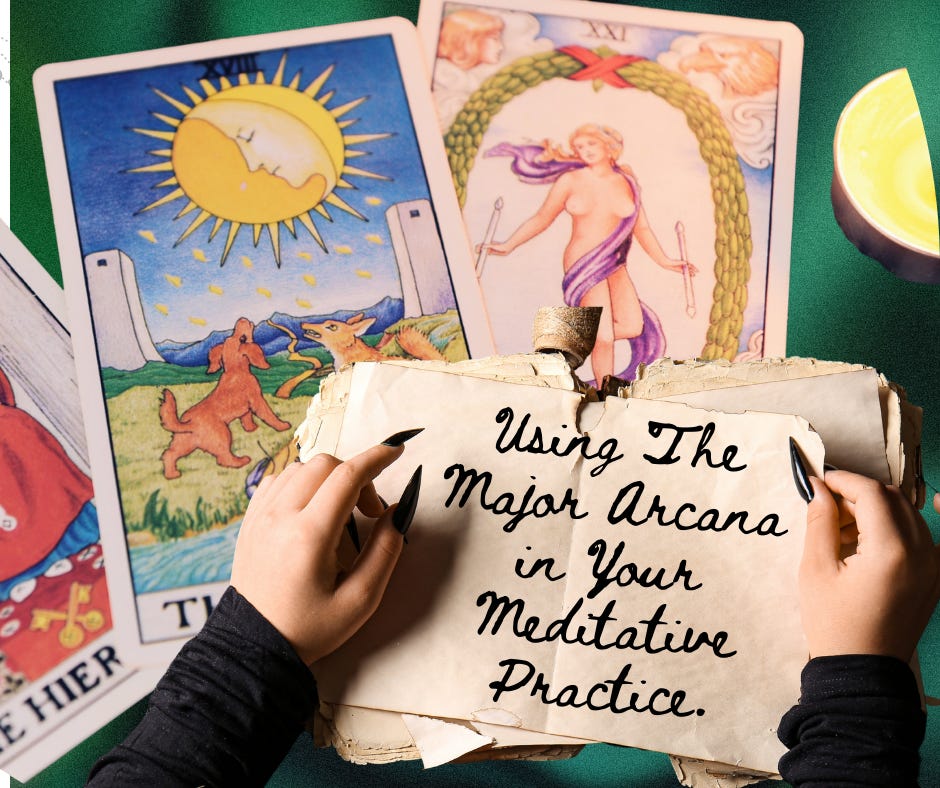
As we all know, the cards tell a story—and each card has its own unique tale to share.
Over the years, I’ve spent a good amount of time getting to know each card and its individual voice. There are so many ways to build that relationship, but one of the first methods I tried was simply meditating with them.
I began with the Major Arcana.
Working exclusively with the Majors, I would pull one card each day. I focused not only on its message for that specific day, but also on understanding the card’s deeper meaning. I’d start by connecting with the card, jotting a few notes in my journal, and then using it as the focus of my daily meditation. Throughout the day, I’d reflect on how the energy of that card might show up in my interactions. It was a bit like asking myself, "What would [insert Major Arcana card here] do?"—over and over again.
This practice helped bring the cards down from abstract archetypes to relatable energies I could work with in daily life. I began to understand their strengths, challenges, and the kinds of support they offer.
Take The Hanged Man, for example. How would he handle a tight deadline at work? Well, The Hanged Man is all about stepping back, pausing, and seeing things from every angle. His glowing halo reminds me that reflection and curiosity are powerful tools—and that rushing isn’t always the best solution. His strength lies in observing, re-evaluating, and choosing the wisest next step—ideally helping me meet that deadline without needing to backtrack or redo things.
More recently, I’ve been applying this same practice in a new way—within my work in tarot activism. Once again, I’m starting with the Majors, but this time I’m asking each card and archetype a deeper, more collective question: How can you support the community as a whole? How can you show up for those who are especially marginalized, vulnerable, or under attack?
It’s become a powerful and enlightening process. These archetypes hold multitudes—and when viewed through a justice-centered lens, their guidance becomes even more layered and relevant. For instance, how would The Empress hold space for a BIPOC queer or trans youth seeking safety and acceptance? How could The Hierophant offer new ways of understanding and honoring non-traditional spiritual practices that have been demonized or pushed to the margins? What would The Tower say to those facing systemic upheaval?
By meditating on these questions, I’m working on deepening my understanding of the cards—not just as personal tools, but as communal allies. I’m trying to understand how they speak to me as well as how they might speak on behalf of, and in service to, others.